avec du maquillage
les pièces de théâtre même
qui ne disent que la narration
All photos and writing are by Maisie Haney
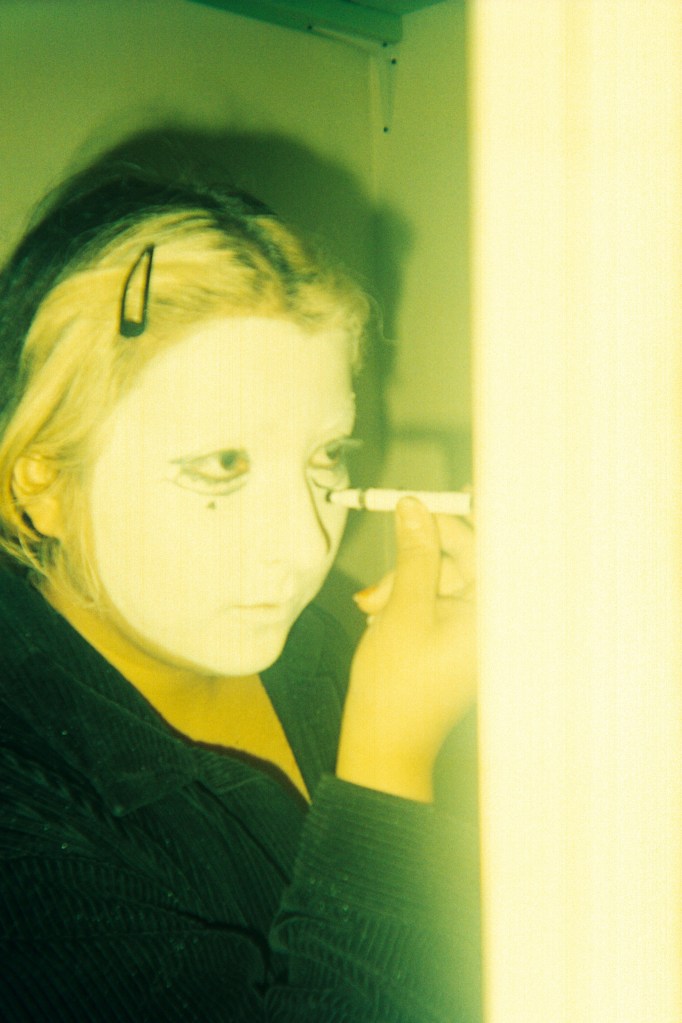
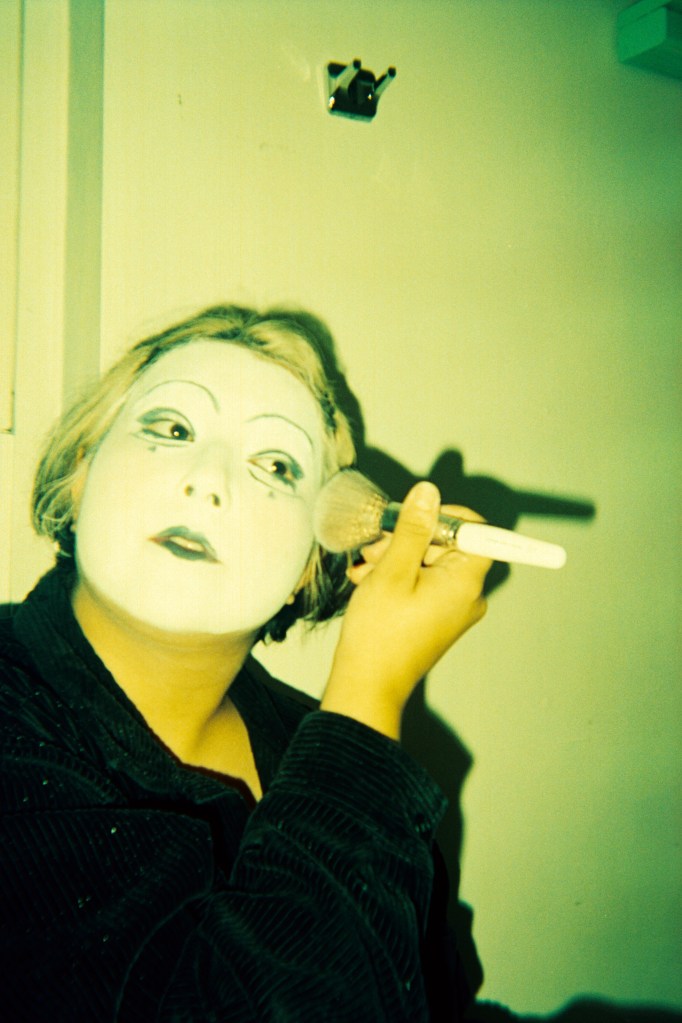
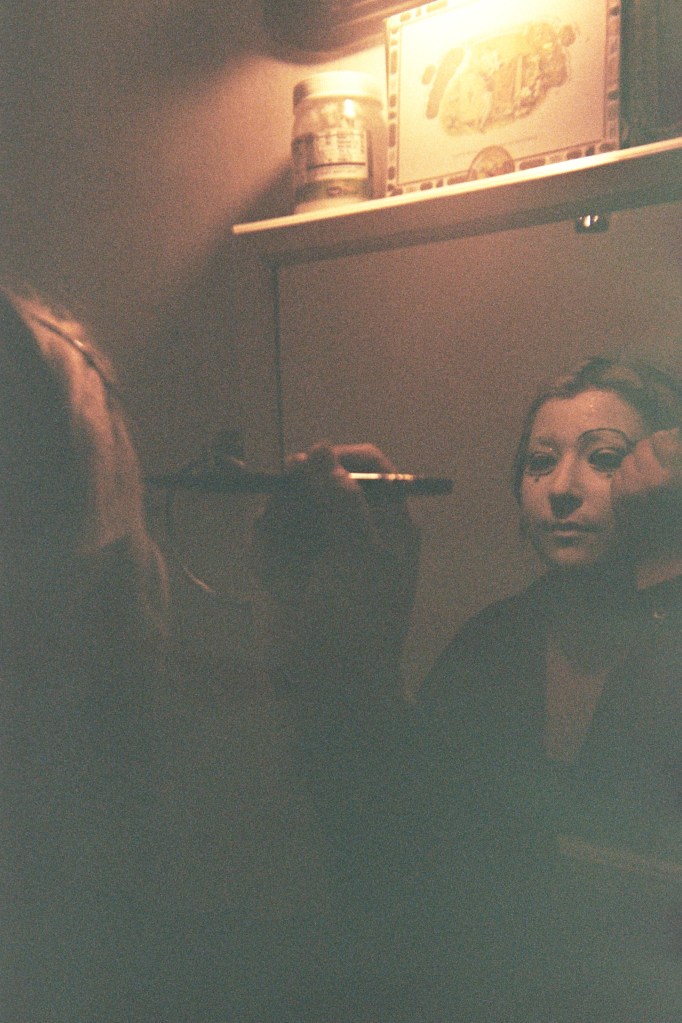
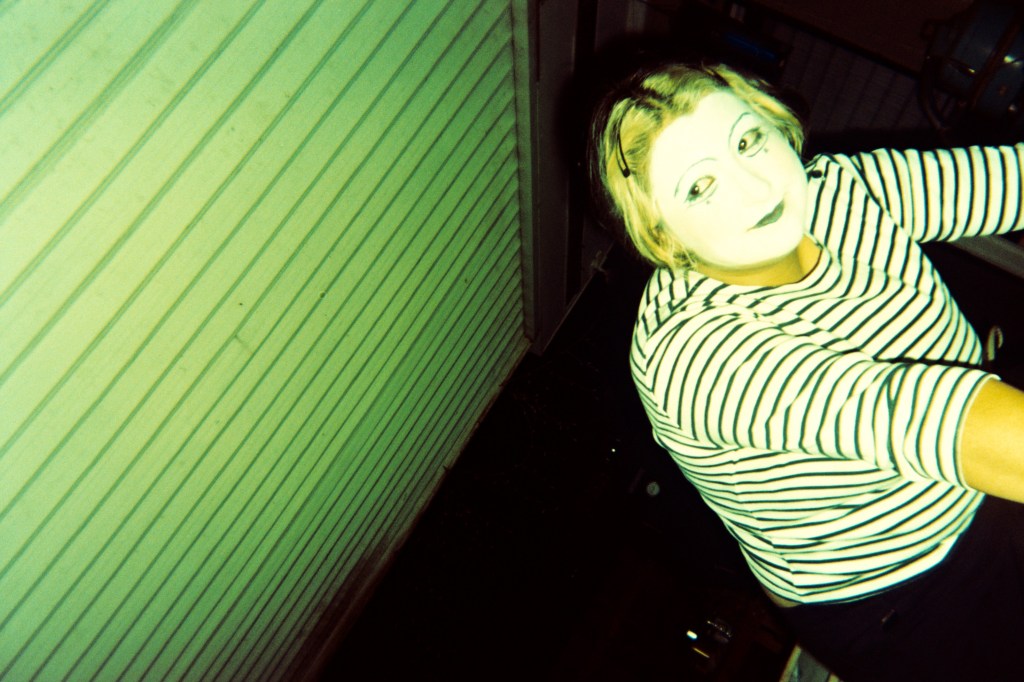
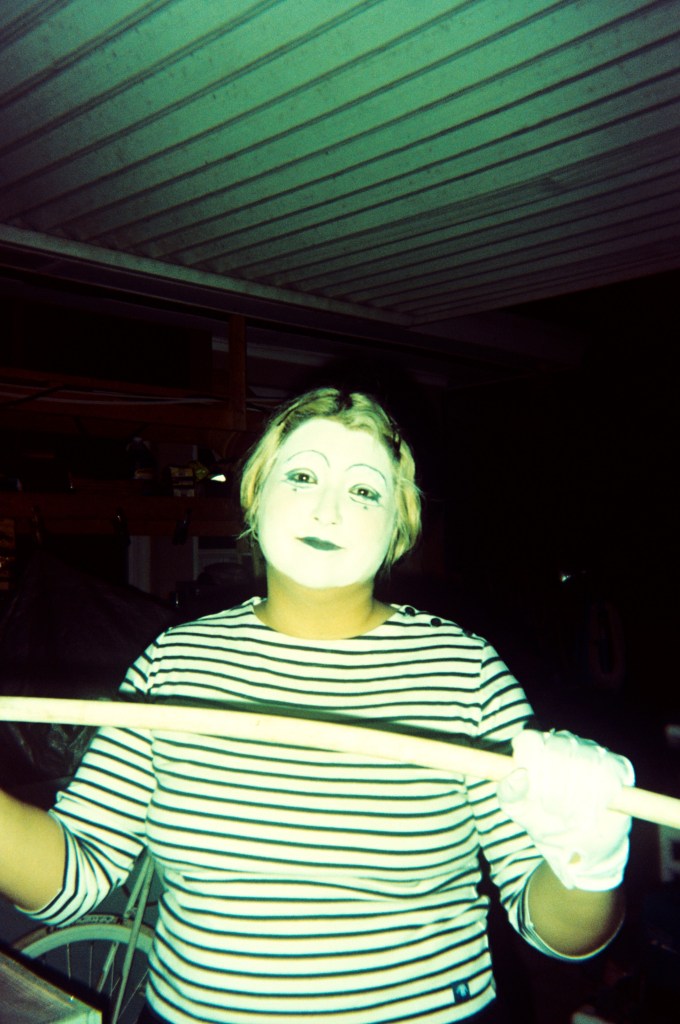
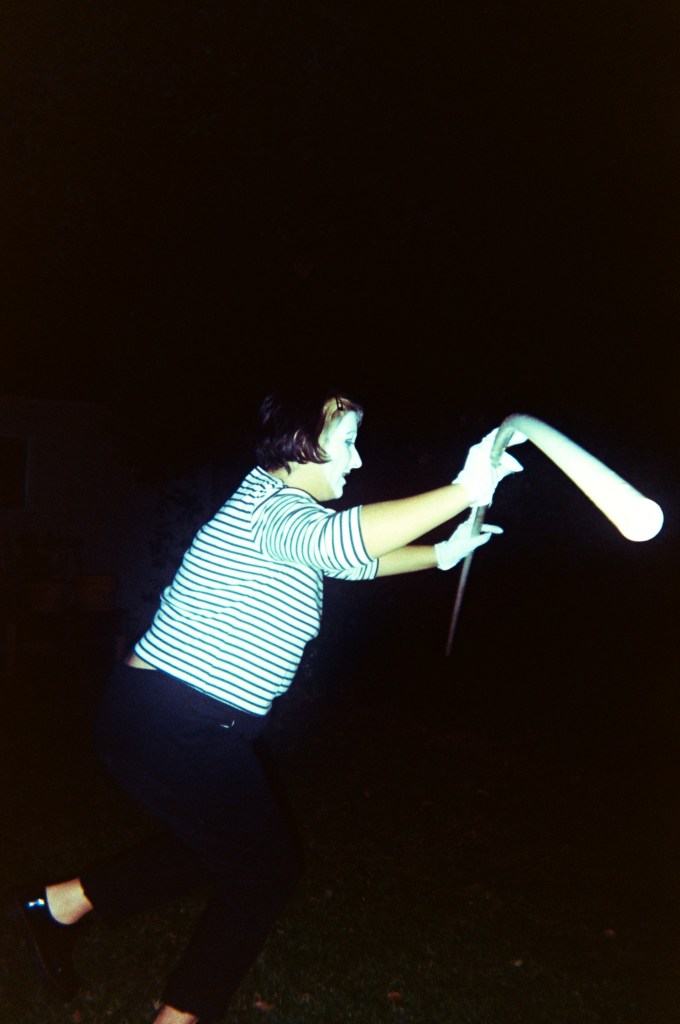
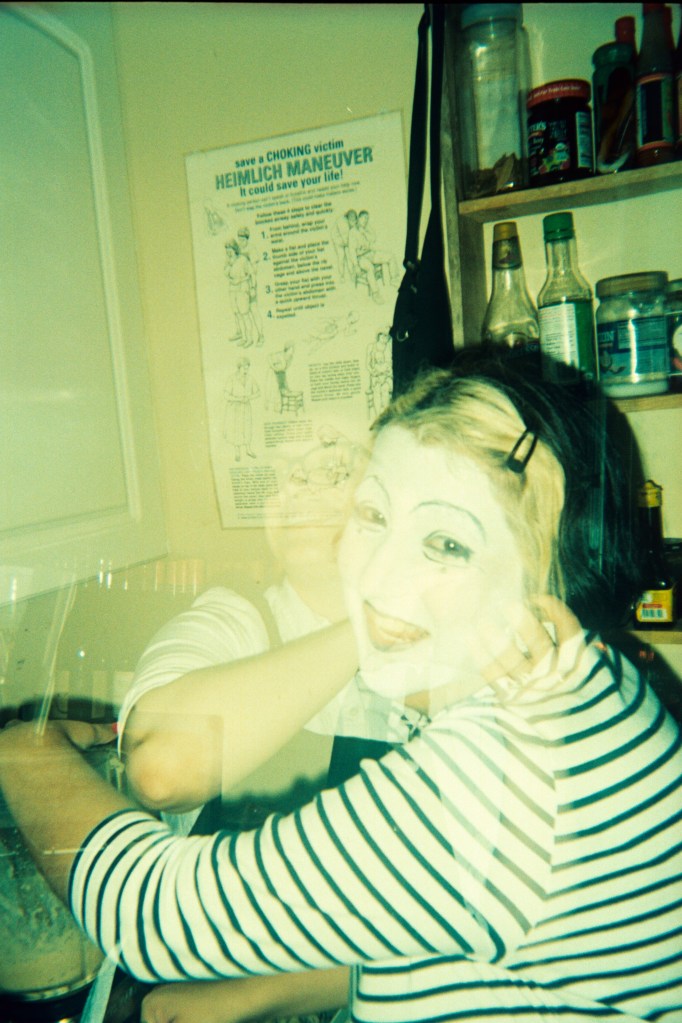
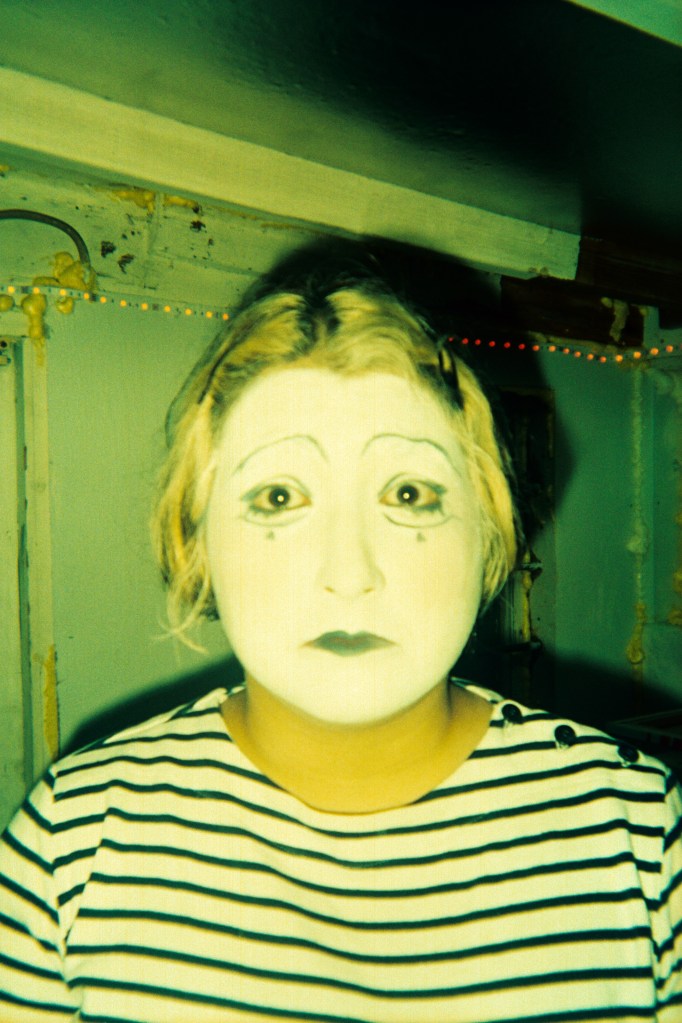
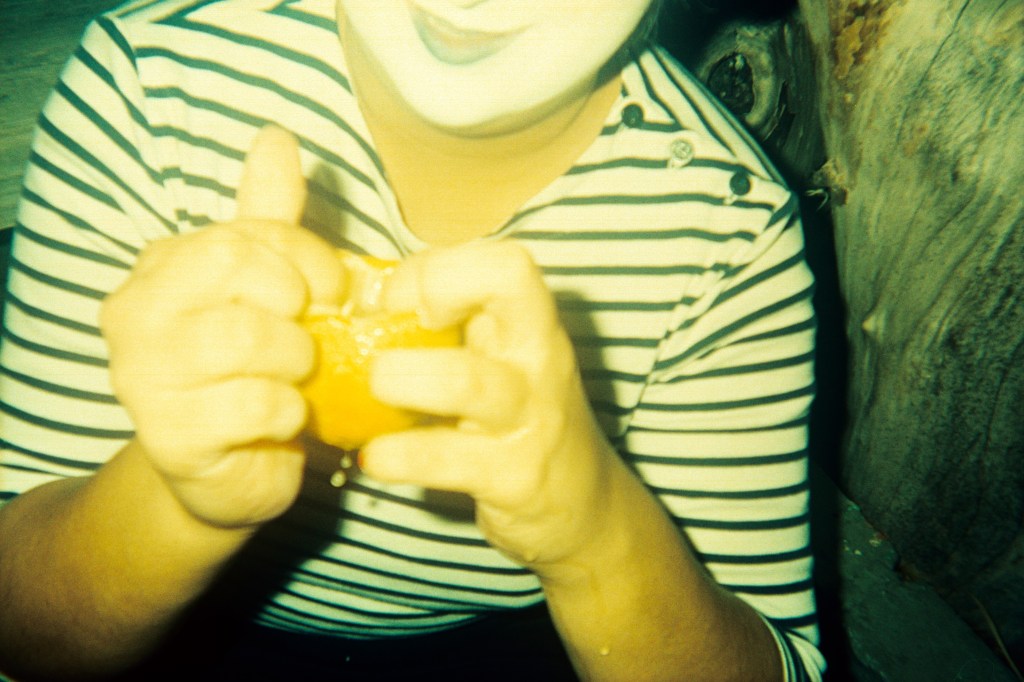
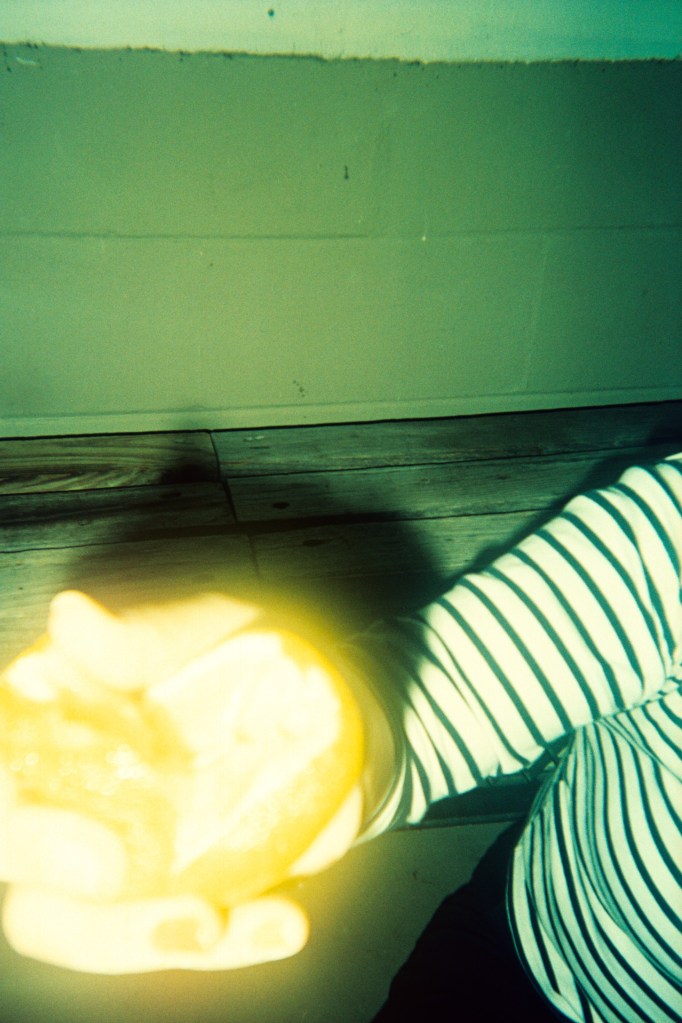
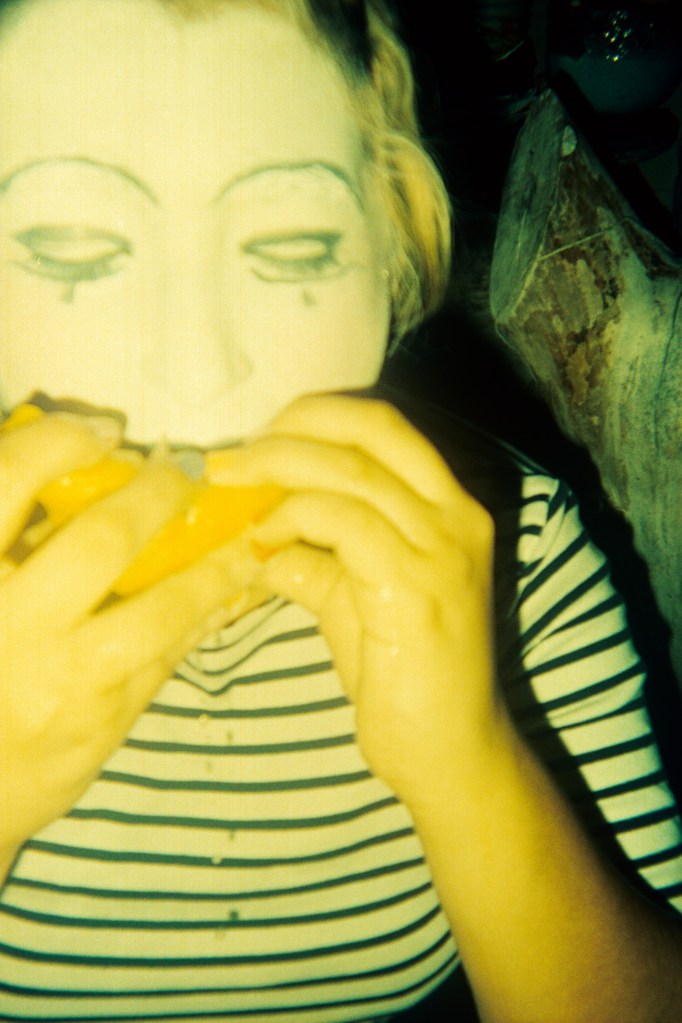
My goal was for the viewer to understand that they don’t know the true and full story of a mime – this mime or any mime – and there is a story in not knowing that story. The larger picture is that everything we know about our world is incomplete, and we will never fill in all of the blanks. The photos depict roughly a chronological order of events (or at least snapshots of events that appear that they could be in chronological order) that could be part of the imagined day in the life of a mime, a curious thing to think about because everything we know about a mime is a falsity. It’s entirely theatrical in nature, and the mime even completely covers the site of expression in the human body.
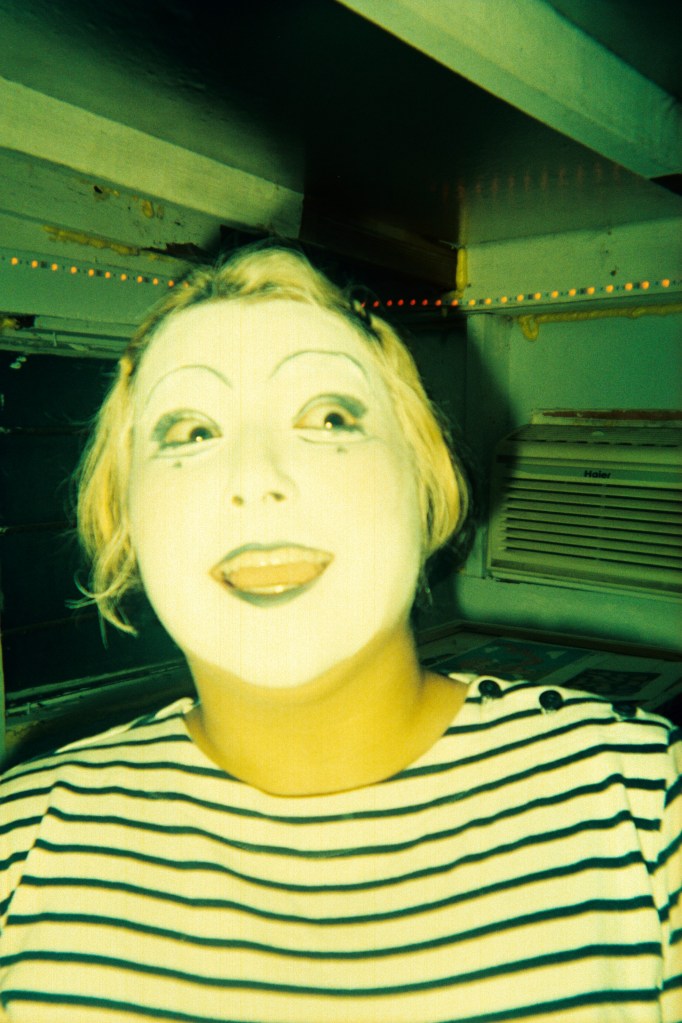
In the photos, actions of the mime range from applying makeup to exaggerating expressions. In most of them, the subject (our mime) takes up most of the composition of the photos. Examples include the two portrait close-ups of the mime’s expressions of happiness and sadness. The distance between the mime and the viewer seems fairly small, yet the proximity doesn’t bring the viewer any closer to who is underneath the makeup. The horizontal lines of them I am shirts do you make the composition less inviting to the viewer. In our duscussions and readings about curation, we learned that what you don’t include is just as important as what you do include. Someone who is accustomed to reading images visually might wonder how the photo might differ if the stripes were vertical leading a path between the view were in the subject of the photograph.
All of the photographs were shot on expired film from a point and shoot camera. This implies two things: one, that expired film chemically would lead to a different visual effect; and two, the compositions were not carefully planned out, but the photographer relied on instincts about the compositional outcome. The effect of the expired film can be seen in the photographs as they are yellow colored in an obviously unnatural manner in which the exaggeratedly glowing parts of the image have the lightest values. These portions of the image highly contrast with the rest of the composition to highlight the photo essay’s and the poem’s subject and there unnaturally gleaming expressions.
The written captions run together in fragments, composing A French poem which emphasizes brevity as a theme of the photo essay. The translation is the following:
A silly question
What do mimes do
They bury their faces
With make up
The theatrics still
are fleeting
The drama of yesterday
The make up animates
The mime, the expressions
They only tell the narrative
Of the cloak of the mime (which in French translates to literally the coat of the mime)
What you see
A part of it is like that
The poem is roundabout way of saying that the mime is only a mime for a part of the time. In other words, what you see is usually only ever a snapshot, a small clip or even half of the series – there is always information you never know.
Although I did not choose the medium, photography is a wonderful way to convey what is fleeting when strategically using or emphasizing visual elements. It is especially easy to grasp the idea if the audience has a particular affinity for photography or understands that the photograph is just a fleeting moment, though we can be influenced by its permanence and authenticity. What is in a photograph is not always true and though I did not manipulate the image myself, I did make a choice that would result in images that do not look like everyday life in color.
 Orlando's Music Community